
The Transition From Soldier to Civilian Is Harder Than People Think
The day you leave the military, everyone congratulates you. They say things like "thank you for your service" and "you must be so relieved." They throw a barbecue. They ask what you're going to do next. And you stand there, smiling, nodding, already feeling the ground shift beneath you — because nobody told you that leaving the military would feel like losing yourself.
The transition from military to civilian life is fundamentally an identity crisis, not just a logistical challenge. Veterans lose their structure, community, purpose, and shared language all at once. Psilocybin can help by creating space to grieve the military identity, reconnect with forgotten parts of the self, and discover that meaning does not require a uniform.
The transition from soldier to civilian is not a logistical problem. It is not about finding a job or filling out VA paperwork. It is an identity crisis, and it is one of the most disorienting experiences a human being can go through.
This piece is part of our broader resource on Psilocybin Therapy for Veterans.
The Structure Vacuum
In the military, every day has a shape. You know when to wake up, what to wear, where to be, what is expected of you. There is a chain of command. There is a mission. There is purpose built into the architecture of your life.
And then it's gone.
Civilian life is open-ended in a way that sounds like freedom but feels like freefall. Nobody is telling you what to do. Nobody is depending on you in the way your unit depended on you. The alarm goes off and there is no formation, no briefing, no objective. Just a day stretching out in front of you, shapeless and quiet.
Many veterans describe this as the most destabilizing part of the transition. Not the trauma. Not the nightmares. The emptiness. The silence where structure used to be.
Who Am I Without the Uniform?
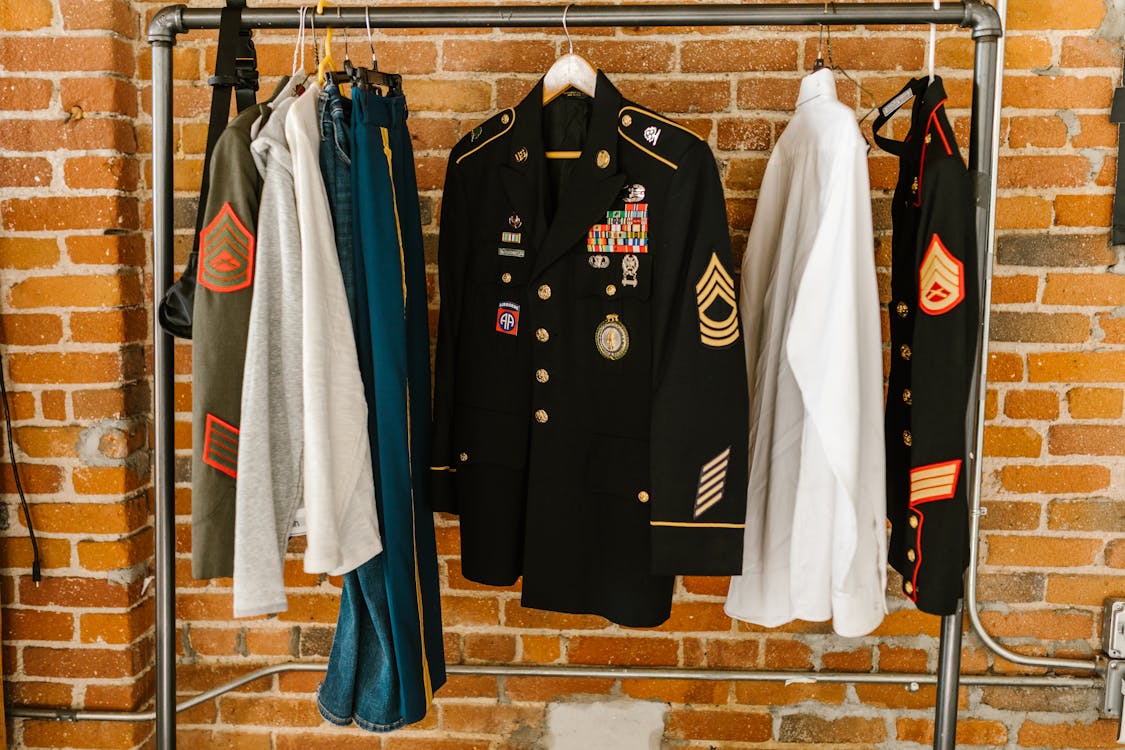
In the military, identity is collective. You are part of something larger than yourself — a unit, a branch, a mission. You are defined by your role, your rank, your specialty, your service. There is pride in that. There is belonging.
When you separate, you lose all of it at once:
- Your title — you were a sergeant, a medic, a team leader. Now you are just... a person
- Your community — the people who understood you without explanation are scattered across the country
- Your purpose — the mission that gave your life direction has ended, and nothing has replaced it
- Your language — you speak in acronyms and dark humor that civilians don't understand and find unsettling
The question "what do you do?" — which civilians ask casually at parties — can feel like a gut punch. Because for many veterans, the honest answer is: "I don't know anymore."
The Disconnect
Perhaps the most isolating part of the transition is the realization that civilians live in a completely different world. They worry about things that feel trivial. They complain about things that feel absurd. They have no frame of reference for what you've been through, and you have no frame of reference for how to care about what they care about.
This isn't arrogance. It's disorientation. The veteran isn't looking down on civilian life — they simply can't find their place in it.
Conversations feel shallow. Friendships feel performative. Dating feels impossible because how do you explain who you are to someone who has never experienced anything close to what shaped you? The result is withdrawal — not because the veteran doesn't want connection, but because connection requires a shared language they no longer have.
The Myth of "Moving On"
Civilian culture has a narrative about veterans that goes something like this: you served, it was hard, now it's over, time to build a new life. Move forward. Be grateful. Adjust.
But identity doesn't work that way. You can't just swap one self for another like changing clothes. The person who went to war and the person standing in a grocery store trying to remember what kind of cereal to buy are the same person — and that person is trying to reconcile two completely different realities.
"Moving on" implies that the military chapter is closed. But for many veterans, it is the most defining chapter of their lives. It is where they discovered what they were capable of, where they formed their deepest bonds, where they experienced the highest highs and the lowest lows. You don't move on from the thing that made you who you are.
Where Psilocybin Fits In
Psilocybin is not a fix for identity loss. It is not going to hand a veteran a new purpose or tell them who they are supposed to be now. But what it can do is create space — space to see clearly.
During a psilocybin experience, many veterans report:
- Seeing their military service from a new perspective — not as something lost, but as something that will always be part of them
- Feeling reconnected to parts of themselves they thought were gone — curiosity, tenderness, wonder
- Understanding that identity is not fixed — that they are not just a soldier and not just a civilian, but something more complex and more whole
- Experiencing a sense of meaning that isn't tied to a mission or a rank, but to something deeper — connection to life itself
- Grieving properly — mourning the loss of the military identity in a way they never allowed themselves to before
This isn't about fixing. It's about seeing. Psilocybin can help a veteran see that the emptiness they feel is not permanent, that the identity they lost is not the only identity they have, and that the transition is not a failure — it is a passage.1
Integration: Building Forward
What happens after the psilocybin experience is where the real work begins. Integration is the process of taking what was seen, felt, and understood during the session and weaving it into daily life.
For veterans working through identity transition, integration might look like:
- Reconnecting with parts of their pre-military self — interests, relationships, and dreams that existed before service
- Finding new forms of service — many veterans discover that the need to serve doesn't go away, it just needs a new expression
- Building community — seeking out other veterans who understand, or finding civilian connections that feel genuine rather than performative
- Allowing the grief — giving themselves permission to mourn the military life without feeling weak for missing it
- Redefining purpose — understanding that purpose doesn't have to come from external structure, it can come from within
Integration is not a one-time event. It is an ongoing practice. And for many veterans, it is the missing piece — the thing that turns a psychedelic experience from a profound moment into a lasting transformation.2
You Are Not Lost
If you are a veteran reading this and recognizing yourself in these words, here is what I want you to know:
The difficulty of your transition is not a weakness. It is evidence of how deeply you served.
The emptiness you feel is not a sign that something is wrong with you. It is a sign that something meaningful ended and nothing has replaced it yet. That is not a failure of character — it is a natural human response to profound change.
You do not have to have it figured out. You do not have to pretend that civilian life is easy or that you're "fine." You are allowed to be in transition — because that is exactly where you are.
And if you are looking for a way to see more clearly, to reconnect with yourself, to find meaning beyond the uniform — know that there are paths forward, and you don't have to walk them alone.
Learn more at Psilocybin Therapy for Veterans.
Related Articles
- Psilocybin Therapy for Veterans — The complete guide to psilocybin-assisted healing for military veterans.
- Veteran Psychedelic Integration — Why what happens after the ceremony matters most.
- Psilocybin and Anger — How suppressed anger surfaces and heals during psilocybin experiences.
- Moral Injury vs PTSD — Understanding the two dimensions of veteran trauma.
- Why Some Veterans Try Everything Before Psychedelics — The long road that leads many veterans to psilocybin as a last resort.
References
1. Griffiths, R. R., Johnson, M. W., Carducci, M. A., et al. (2016). "Psilocybin produces substantial and sustained decreases in depression and anxiety in patients with life-threatening cancer: A randomized double-blind trial." Journal of Psychopharmacology, 30(12), 1181–1197.
2. Watts, R., Day, C., Krzanowski, J., Nutt, D., & Carhart-Harris, R. (2017). "Patients' accounts of increased 'connectedness' and 'acceptance' after psilocybin for treatment-resistant depression." Journal of Humanistic Psychology, 57(5), 520–564.
3. Mobbs, M. C., & Bonanno, G. A. (2018). "Beyond war and PTSD: The crucial role of transition stress in the lives of military veterans." Clinical Psychology Review, 59, 137–144.