
Your Brain on Depression: How Neuroplasticity Is Changing What We Know About Recovery
You've probably heard depression described as a "chemical imbalance." It's the explanation most of us grew up with — the idea that your brain just isn't making enough serotonin, and the right pill can top it off like filling a gas tank. It's a tidy story. The problem is, it's dramatically incomplete.
Depression involves real physical changes in the brain — reduced volume in the prefrontal cortex and hippocampus, depleted BDNF, and a hyperactive Default Mode Network that locks people into rumination loops. But neuroplasticity means these changes are not permanent. Both antidepressants and psilocybin may work by restoring the brain's ability to form new connections, offering a biological basis for recovery.
Over the past decade, neuroscience has moved toward a much more nuanced picture. Depression isn't just about having too little of one chemical. It involves actual structural and functional changes in the brain — shrunken regions, weakened connections, and neural circuits that get locked into repetitive, self-defeating patterns.1
But here's the part that matters most: those changes are not permanent. The same brain that can wire itself into depression can also wire itself out. That process has a name, and it's called neuroplasticity.
What Neuroplasticity Actually Means
Neuroplasticity is your brain's ability to physically reorganize itself — to grow new connections between neurons, strengthen ones that are useful, and prune the ones that aren't. It's the mechanism behind learning a new language, recovering from a stroke, or changing a deeply ingrained habit.
Think of it like a trail through a forest. The more you walk a particular path, the more worn and obvious it becomes. Eventually it's the easiest route, the one your feet follow without thinking. Neuroplasticity is what happens when you stop walking the old trail and start cutting a new one. At first it's slow and effortful. Over time, the new path becomes the natural one.
Your brain is doing this all the time. But in depression, the process gets hijacked.
How Depression Physically Changes the Brain
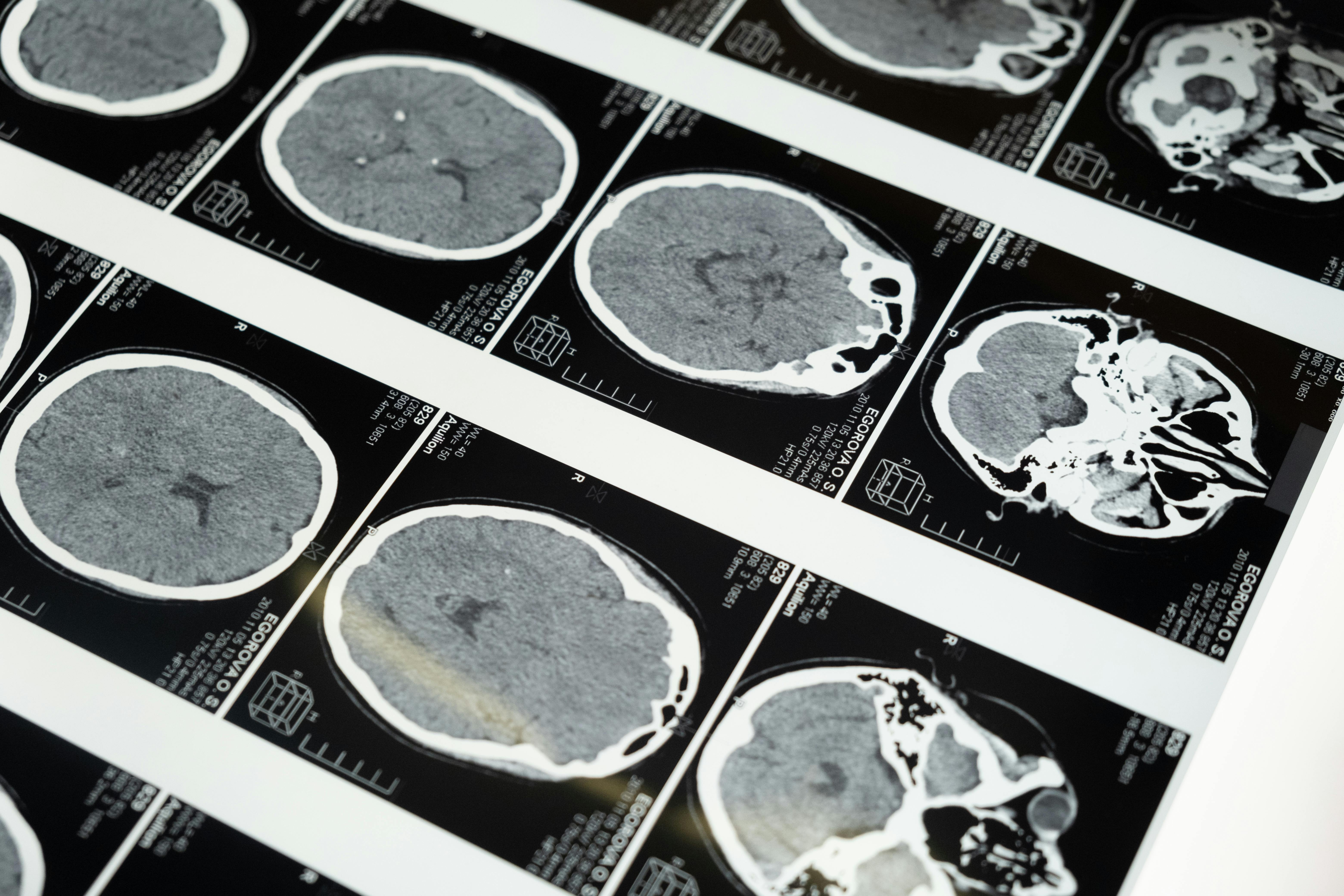
Depression is not just a mood. Brain imaging studies have revealed measurable physical changes in people with chronic depression. These are not metaphors — they show up on MRI scans.1
The Prefrontal Cortex Thins Out
The prefrontal cortex is the part of the brain responsible for decision-making, planning, emotional regulation, and perspective-taking. In people with recurrent depression, this region shows reduced volume and activity. It's as if the brain's command center is running on low power — which is why depressed people often struggle with concentration, motivation, and seeing a way forward.1
The Hippocampus Shrinks
The hippocampus plays a critical role in memory and learning. Chronic depression is associated with hippocampal volume loss, partly driven by elevated cortisol (the stress hormone) and reduced levels of a protein called Brain-Derived Neurotrophic Factor (BDNF).2
BDNF is essentially fertilizer for neurons — it supports the growth and survival of brain cells and the formation of new synaptic connections. In depression, BDNF levels drop significantly. Less BDNF means less neuroplasticity, which means the brain has a harder time adapting and forming new patterns.2
The Amygdala Goes Into Overdrive
While the prefrontal cortex quiets down and the hippocampus shrinks, the amygdala — the brain's threat-detection center — becomes hyperactive. It starts firing more intensely in response to negative stimuli, and the connections between the amygdala and the prefrontal cortex weaken.1
The result is a brain that overreacts to threats and negative information while losing its ability to regulate those reactions. This is why depression often comes with a distorted perception of reality — everything feels more dangerous, more hopeless, and more personal than it actually is.
Why Your Brain Gets "Stuck"
Here is where it gets really interesting. One of the most important discoveries in depression research involves the Default Mode Network (DMN) — a set of brain regions that activate when you're not focused on the outside world.3
The DMN is involved in:
- Self-referential thinking ("What does this mean about me?")
- Replaying past events
- Worrying about the future
- Internal storytelling and narrative
- Rumination
In healthy brains, the DMN turns on and off naturally. But in depression, the Default Mode Network becomes overactive and rigid. It gets stuck in the "on" position, trapping people in loops of self-critical thinking, regret, and anxiety about the future.3
This is the rumination loop. It's not a character flaw or a lack of willpower. It's a measurable pattern of brain network activity that has become so well-worn — like that trail through the forest — that the brain defaults to it automatically.
And because the prefrontal cortex is weakened, there's less capacity to interrupt the loop. The brain literally loses its ability to change the channel. For a deeper look at how these brain networks function, see our article on what psilocybin does to your brain.
Rethinking Antidepressants: It May Be About Plasticity, Not Just Serotonin
If depression were simply "not enough serotonin," then SSRIs should work within hours — they increase serotonin availability almost immediately. But anyone who has taken an antidepressant knows it typically takes four to six weeks to feel an effect. That delay has always been a puzzle.
The emerging explanation is that SSRIs may work not primarily by boosting serotonin itself, but by triggering downstream changes in neuroplasticity. Over weeks of use, SSRIs appear to increase BDNF levels, promote the growth of new neurons in the hippocampus, and gradually restore the brain's ability to form new connections.4
In other words, the therapeutic effect of antidepressants may come from helping the brain rewire itself — not from correcting a simple chemical deficit. The serotonin boost may be the trigger, but neuroplasticity is the mechanism that actually produces recovery.
This reframing matters because it changes how we think about treatment. If plasticity is the goal, then anything that promotes neuroplasticity — whether it's medication, exercise, therapy, sleep, or newer interventions — could potentially contribute to recovery.4
Psilocybin: A Different Path to the Same Destination?

This is where the research gets particularly exciting. If traditional antidepressants promote neuroplasticity slowly over weeks, psilocybin appears to do something similar — but on a dramatically compressed timeline.
Disrupting the Default Mode Network
Neuroimaging studies led by Robin Carhart-Harris at Imperial College London found that psilocybin significantly reduces activity in the Default Mode Network during the psychedelic experience. The rigid, overactive self-referential loops that characterize depression are temporarily disrupted, allowing the brain to communicate in new and more flexible patterns.3
Many participants describe this experience as "seeing things from outside themselves" or feeling freed from the mental prison of repetitive negative thinking. From a neuroscience perspective, this is the DMN losing its grip.
Clinical Results in Treatment-Resistant Depression
A landmark randomized controlled trial by Davis et al. at Johns Hopkins University found that psilocybin-assisted therapy produced large, rapid, and sustained antidepressant effects in patients with major depressive disorder. Over 70% of participants showed a clinically significant response, and 54% were in remission at four weeks after just two psilocybin sessions.5
These are striking numbers, especially considering that many participants had not responded well to conventional treatments.
Growing New Connections — Literally
Perhaps the most remarkable finding comes from preclinical research by Ly et al. at UC Davis. Their team demonstrated that psychedelics, including psilocybin, promote the growth of dendritic spines — the tiny protrusions on neurons where synaptic connections form. In laboratory models, a single dose of a psychedelic compound increased dendritic spine density and complexity in cortical neurons.6
In plain language: psilocybin appears to help neurons physically grow new connection points. This is neuroplasticity at the cellular level — and it may explain why people report lasting shifts in perspective, mood, and behavior after psychedelic experiences. We explore the duration of these effects in our article on whether the effects of psilocybin are permanent.
Increased BDNF and Global Connectivity
Research has also shown that psilocybin increases levels of BDNF — the same neuroplasticity-promoting protein that is depleted in depression — and that it creates a temporary state of heightened global brain connectivity, where regions that don't normally communicate begin sharing information.7
Some researchers describe this as a "window of plasticity" — a period after psilocybin use where the brain is more malleable and more responsive to change. This may be why integration work (therapy, journaling, meaningful reflection) in the days and weeks following a psilocybin experience is considered so important. The new trails are being cut, but they need to be walked repeatedly to become lasting pathways.
Why This Matters: The Brain Can Change

The neuroplasticity framework offers something that the old "chemical imbalance" model never did: a genuine biological basis for hope.
If depression is not a fixed chemical state but rather a pattern of brain activity that has become rigid and self-reinforcing, then recovery is not about finding the right pill to correct a permanent deficiency. It's about helping the brain become flexible enough to form new patterns.
That flexibility can come from many directions:
- Antidepressants — which may promote plasticity gradually over weeks
- Psychotherapy — which helps build new cognitive and emotional patterns
- Exercise — one of the most potent natural BDNF boosters known
- Mindfulness and meditation — which can change Default Mode Network activity over time
- Psilocybin-assisted therapy — which may accelerate neuroplastic change in a compressed timeframe
None of these are magic bullets. But all of them point in the same direction: the brain that wired itself into depression can wire itself out. The trails can change. The forest is not fixed.
An Important Safety Note
If you are currently taking antidepressants and are considering psilocybin, there are critical safety considerations you need to be aware of. SSRIs and other serotonergic medications can interact with psilocybin in ways that reduce effectiveness or create risk.8
Key points:
- Never stop antidepressants abruptly — tapering must be done gradually under medical supervision
- SSRIs can significantly reduce or block the effects of psilocybin — read more in our article on Zoloft and psilocybin
- Combining serotonergic substances carries a risk of serotonin syndrome, a potentially serious condition
- Proper screening by a knowledgeable facilitator or clinician is essential — see our full guide on antidepressants and psilocybin
- People with certain psychiatric conditions (such as schizophrenia or bipolar I disorder) should not use psilocybin
Psilocybin is a powerful tool, not a casual one. The research is promising, but safety, preparation, and proper medical guidance are non-negotiable. For a comprehensive overview of what responsible preparation looks like, visit our psilocybin safety and preparation guide.
Final Thoughts
For a long time, depression was treated as a problem of chemistry — too little serotonin, add more. That model helped millions of people, and antidepressants remain an important treatment option. But the science has evolved, and so should our understanding.
Depression involves real, physical changes in the brain: shrunken regions, weakened connections, rigid network patterns, and depleted growth factors. But the same property that allows these changes to take hold — neuroplasticity — is also what makes recovery possible.
Your brain is not broken. It's stuck. And stuck things can be unstuck.
Whether through traditional treatments, emerging approaches like psilocybin-assisted therapy, or the daily practices that promote brain health, the message from modern neuroscience is clear: the brain can change, and that means you can too.
Related Articles
- What Does Psilocybin Do to Your Brain? — How psilocybin affects brain networks, the Default Mode Network, and neuroplasticity.
- Are the Effects of Psilocybin Permanent? — How long psilocybin's effects on the brain and mood actually last.
- Zoloft and Psilocybin — Why SSRIs can reduce or block the psychedelic experience.
- Antidepressants and Psilocybin — How SSRIs, SNRIs, and other antidepressants interact with psilocybin.
- Psilocybin Safety and Preparation — The complete guide to safe psilocybin preparation and screening.
References
1. Duman, R. S., et al. (2016). "Synaptic plasticity and depression: New insights from stress and rapid-acting antidepressants." Neuron, 89(3), 433–444.
2. Duman, R. S., & Monteggia, L. M. (2006). "A neurotrophic model for stress-related mood disorders." Biological Psychiatry, 59(12), 1116–1127.
3. Carhart-Harris, R. L., et al. (2017). "Psilocybin for treatment-resistant depression: fMRI-measured brain mechanisms." Scientific Reports, 7, 13187.
4. Castrén, E. (2005). "Is mood chemistry?" Current Opinion in Neurobiology, 15(3), 1–5.
5. Davis, A. K., et al. (2021). "Effects of psilocybin-assisted therapy on major depressive disorder: A randomized clinical trial." JAMA Psychiatry, 78(5), 481–489.
6. Ly, C., et al. (2018). "Psychedelics promote structural and functional neural plasticity." Cell Reports, 23(11), 3170–3182.
7. Shao, L.-X., et al. (2021). "Psilocybin induces rapid and persistent growth of dendritic spines in frontal cortex in vivo." Neuron, 109(16), 2535–2544.
8. Carhart-Harris, R. L., et al. (2021). "Trial of psilocybin versus escitalopram for depression." New England Journal of Medicine, 384(15), 1402–1411.